
Generative art tools
Generative art is made by designing a process rather than drawing every line: you set the rules and the parameters, and the algorithm produces the image. Small changes to the rules can give very different results.
Fractal Explorer renders the Mandelbrot and Julia sets on your graphics card, so you can zoom deep into their edges, which show detail at every scale. Fractal Trees grows plants and fractal curves from L-systems, the string-rewriting rules introduced by the biologist Aristid Lindenmayer in 1968. Voronoi Patterns divides the plane into cells around scattered points, the geometry of giraffe skin and dried mud. Flow Field traces particles through a smooth noise field, Spiral & Fibonacci arranges dots by the golden angle like the seeds of a sunflower, Strange Attractors plots the chaotic orbits of systems such as the Clifford map and the Lorenz butterfly, and Gradient Mesh blends soft fields of color.
Results are seeded and reproducible: the share link stores every setting, so the same link always regenerates the same artwork, and Randomize sets every option and the seed at random in one step that Undo takes back.
7 Generative & Fractal tools
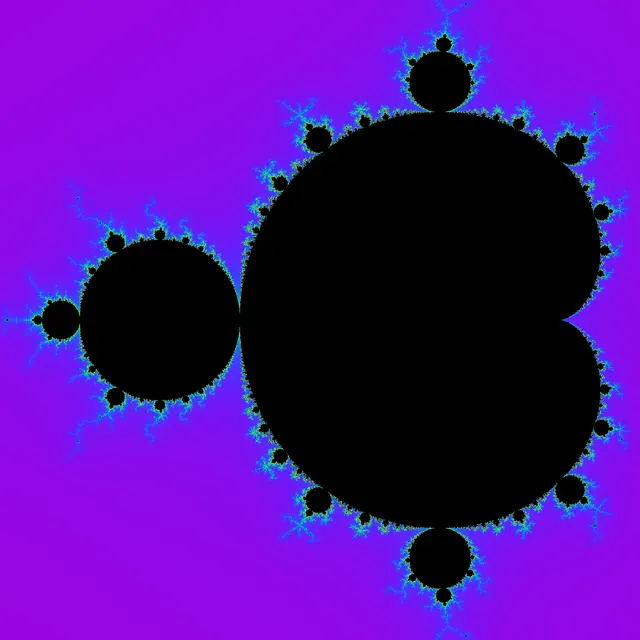
Fractal Explorer
Zoom into GPU-rendered Mandelbrot and Julia fractals with adjustable iterations and color maps.
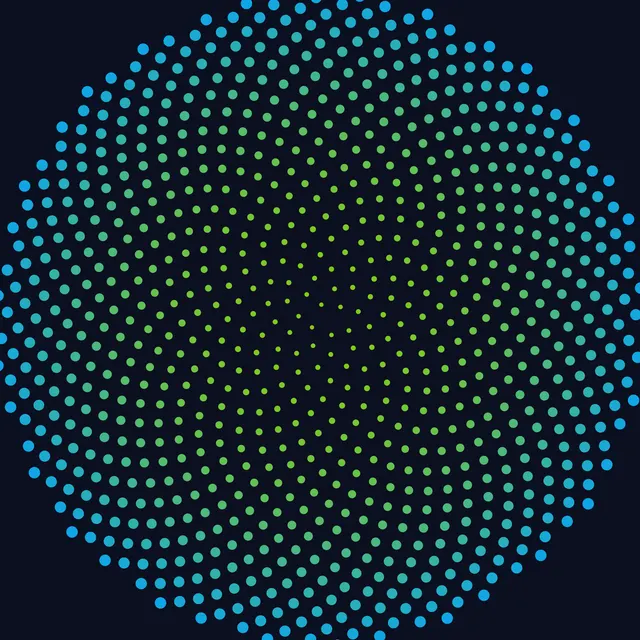
Spiral & Fibonacci
Golden spirals and phyllotaxis art.
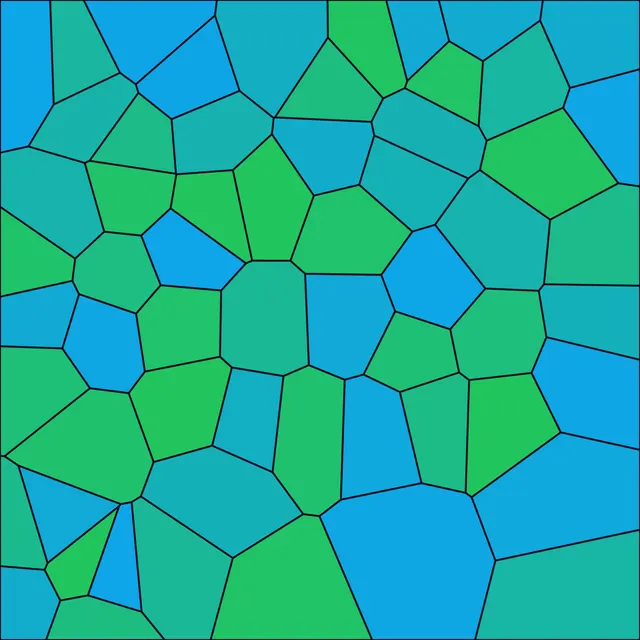
Voronoi Patterns
Organic cellular Voronoi diagrams.
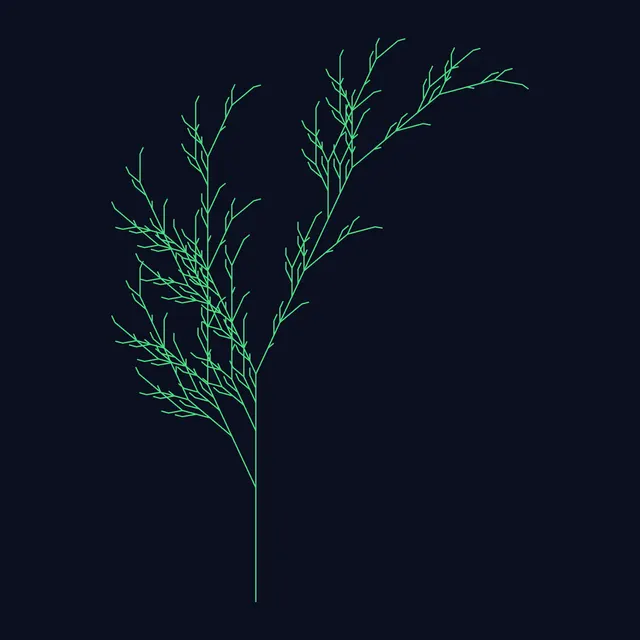
Fractal Trees
L-system turtle graphics — branching trees, Koch curves, and dragon fractals.
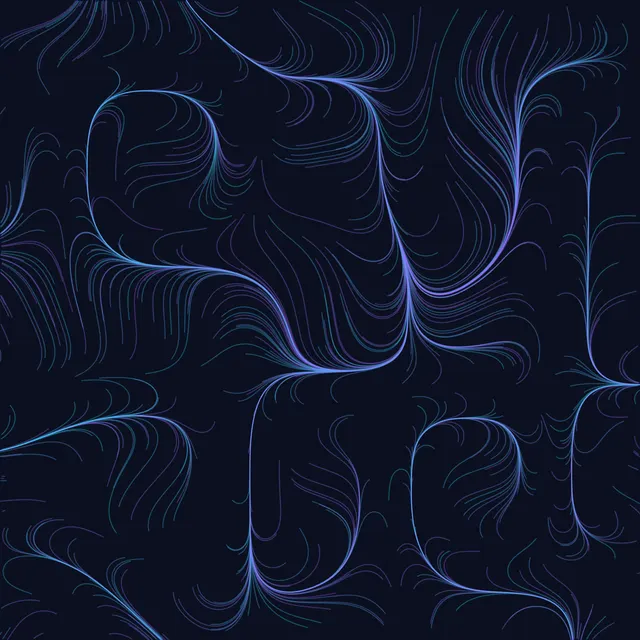
Flow Field
Flowing generative line art guided by a noise vector field.

Gradient Mesh
Smooth multi-point color meshes and soft abstract gradients.
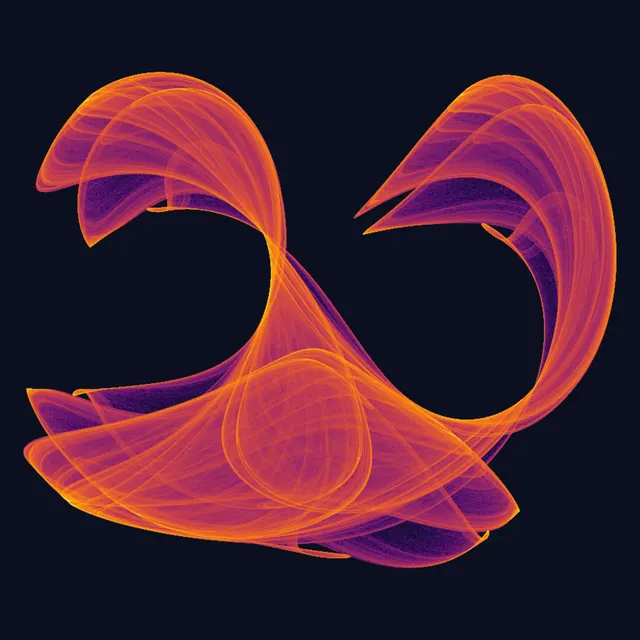
Strange Attractors
Render Clifford, de Jong and Lorenz attractors as density maps, up to 4K.
Frequently asked questions
What is generative art?
Art produced by an autonomous process — usually an algorithm — that the artist designs and tunes. The artist chooses the rules, the randomness and the parameters, and the system generates the work.
Is the randomness reproducible?
Yes. The tools use a seeded random number generator, so the same seed and settings always produce the same image. Press Randomize for new settings and a new seed, Undo to go back, or share the link to reproduce a result exactly.
Which tool should I start with?
Fractal Explorer and Flow Field show results with no setup. Voronoi Patterns and Fractal Trees are good for seeing how a simple rule builds a complex structure.