
Cellular automata and artificial life
Artificial life studies how lifelike behavior can arise from simple rules. In a cellular automaton, every cell of a grid updates at once from the states of its neighbors; in an agent model, many small creatures each follow a few local rules. Neither has a leader or a plan, yet both produce gliders, waves, colonies and swarms.
Conway's Game of Life and Cellular Automata cover the classics from John Conway and Stephen Wolfram, alongside Brian's Brain, Cyclic Cellular Automata that self-organize into spirals, Wireworld circuits and the wandering turmites of Langton's Ant and Turmites. Lenia extends the idea to continuous space, time and states, producing smooth creatures that glide and divide. Reaction-Diffusion runs the Gray–Scott chemical model behind spots and stripes. Flocking (Boids), Slime Mold and Particle Life switch from grids to agents: birds that steer by their neighbors, foragers that follow each other's trails, and colored particles whose attraction rules make them assemble into cells and chains.
Every simulation runs live: pause, step frame by frame, change a rule mid-run or start from a preset, and share a link that reproduces the exact setup.
12 Automata & Life tools
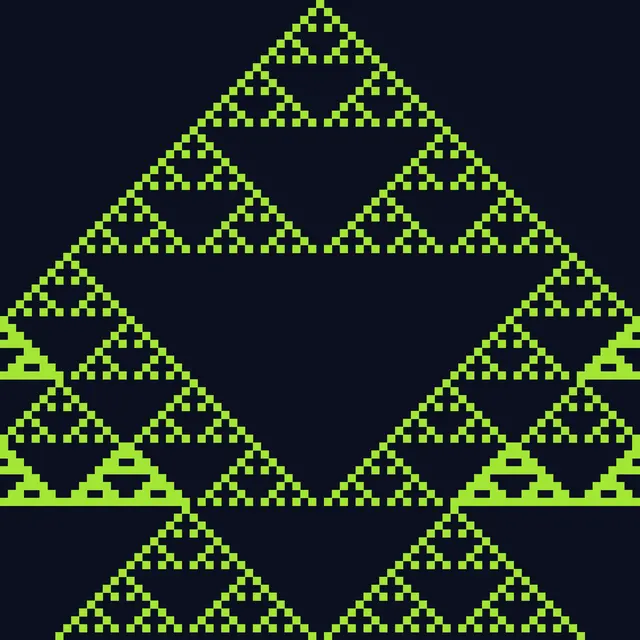
Cellular Automata
Elementary cellular automata woven into intricate row-by-row patterns.
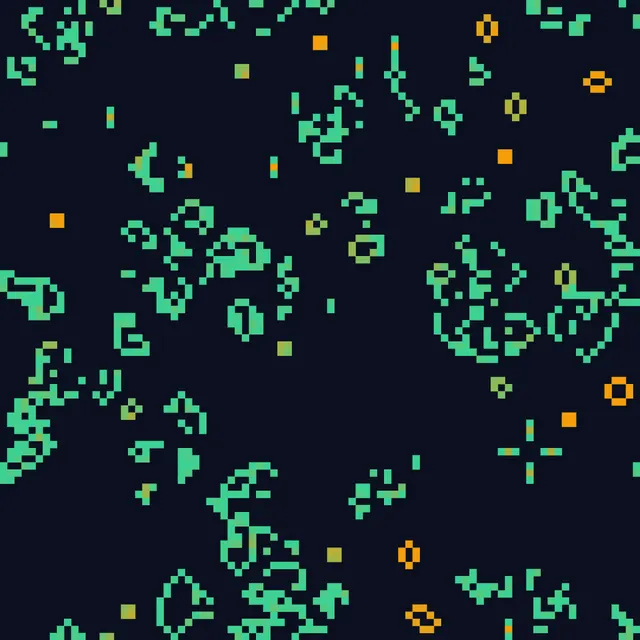
Conway's Game of Life
Conway's Game of Life and other life-like cellular automata, animated live.
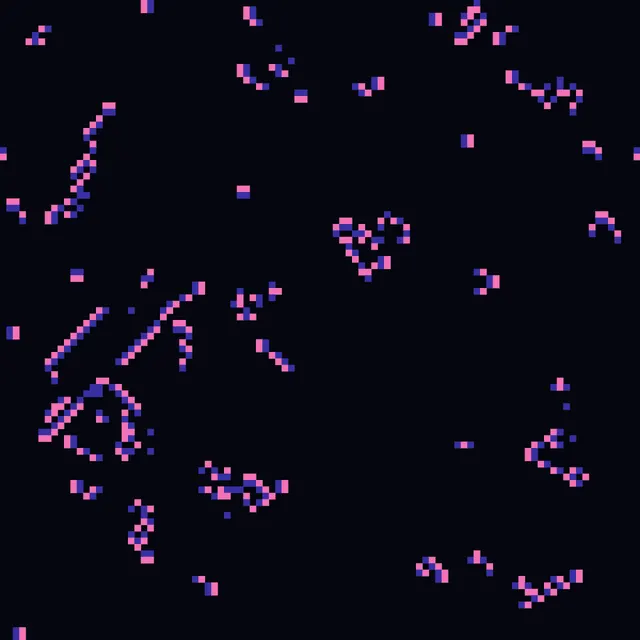
Brian's Brain
A three-state cellular automaton that erupts into shifting, spark-like waves.
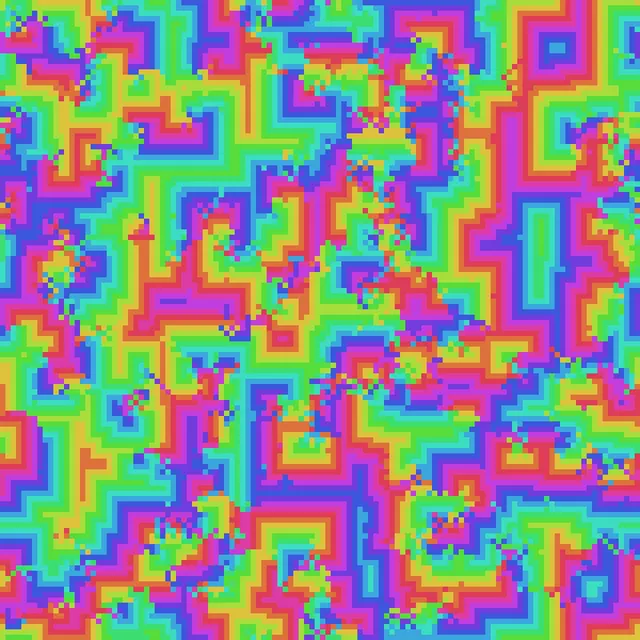
Cyclic Cellular Automata
Cyclic automata that organize random noise into rotating spirals.
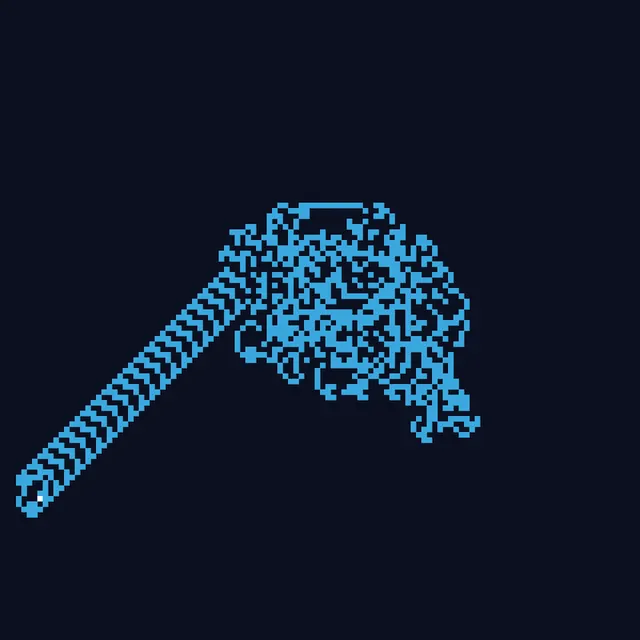
Langton's Ant
An ant that turns on colored cells and, after a long chaotic phase, builds a repeating highway.
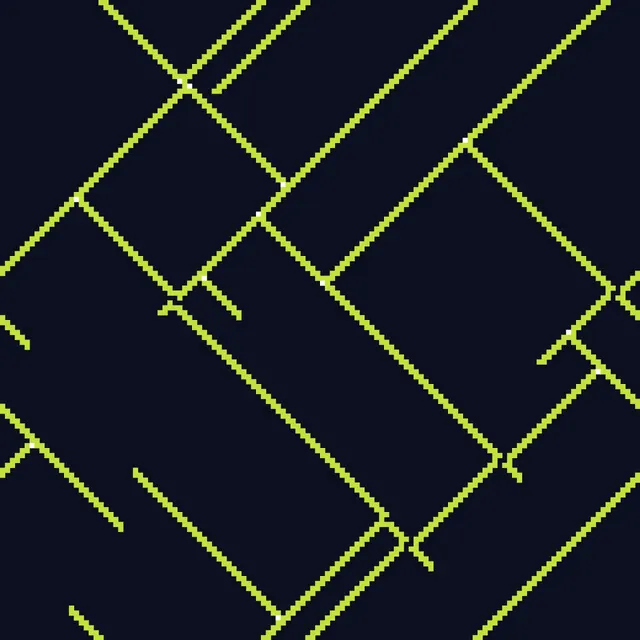
Turmites
Two-dimensional Turing machines that draw spirals, worms and lace.

Wireworld
A four-state automaton for simulating electrons moving through circuits.
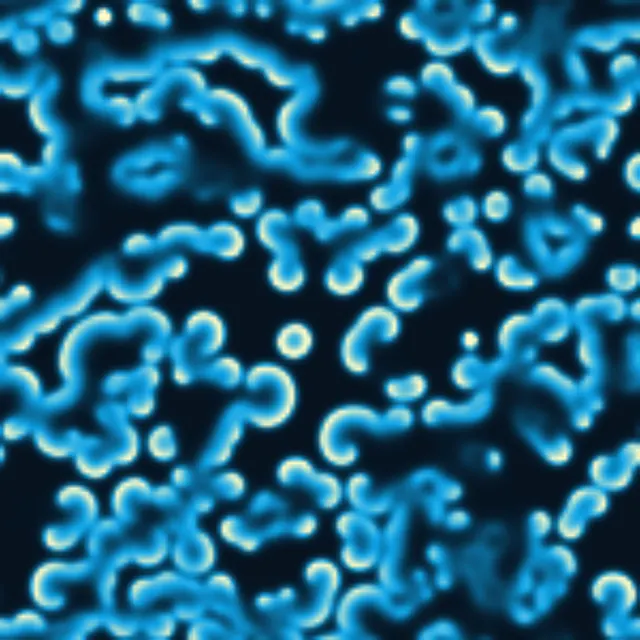
Reaction-Diffusion
Gray-Scott chemistry that grows organic spots, stripes and coral.
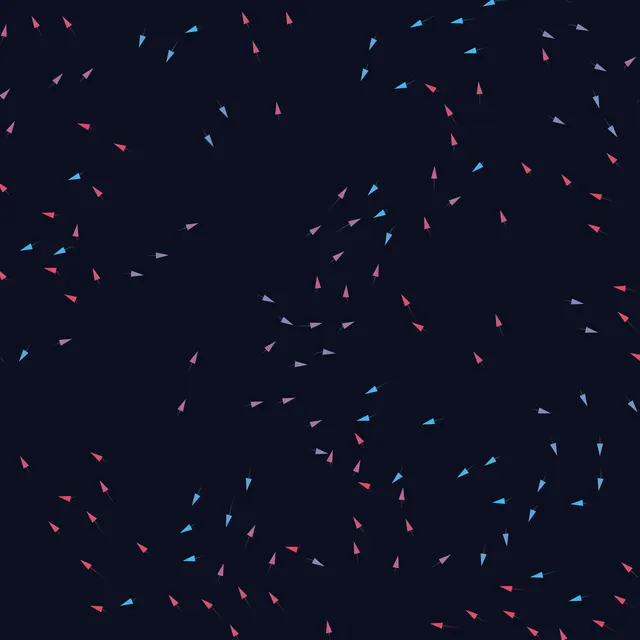
Flocking (Boids)
An interactive boids simulation where flocks self-organize from three simple rules.
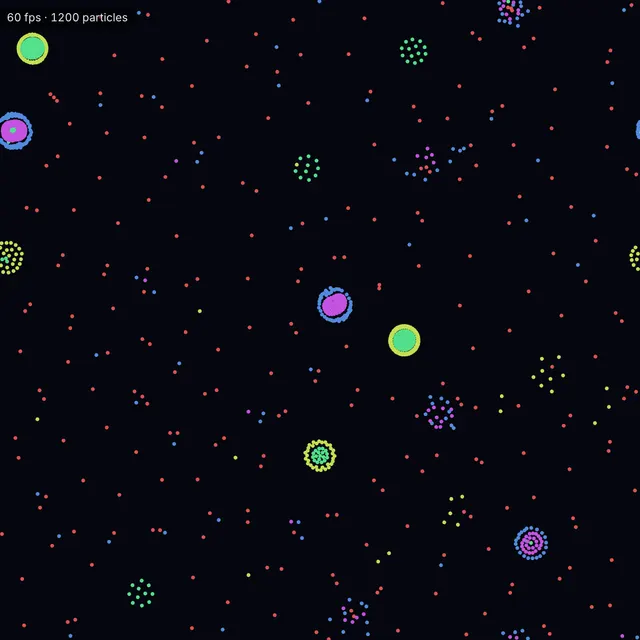
Particle Life
Interactive particle simulation where colors attract and repel into lifelike cells.

Slime Mold
Physarum agents that lay and follow trails, weaving organic network patterns.
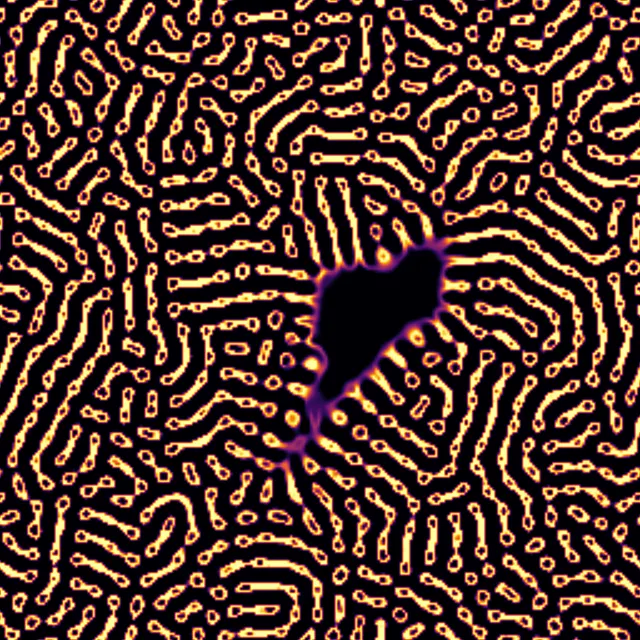
Lenia
A continuous Game of Life on your GPU — worms, coral and bubble lattices self-organize from noise.
Frequently asked questions
What is a cellular automaton?
A grid of cells, each in one of a few states, updated in steps by a fixed rule that only looks at nearby cells. Conway's Game of Life is the best-known example: a dead cell with exactly three live neighbors comes alive, and a live cell survives with two or three.
Is Lenia a cellular automaton?
Yes, a continuous one. Lenia, introduced by Bert Wang-Chak Chan in 2019, replaces on/off cells with smooth values and a ring-shaped neighborhood, which lets it produce organism-like creatures that move and grow.
Can I use these simulations for teaching?
Yes. Each page explains the model, and the controls let students change one rule at a time and watch what happens. The share link captures the exact setup for a lesson or an assignment.