
Animal behavior simulations
Animals act on a few local rules, and the behavior of a whole group follows from them. Each simulation here runs a published model of one behavior, so a colony, a herd or a flock does what the model says and nothing more, and a chart or a readout shows the result.
Insects build and choose without a plan. Ant Colony follows the two pheromone trails Jean-Louis Deneubourg and colleagues described in 1990, with births and deaths, spiders and rival colonies. Honeybee Foraging moves foragers to the richer flowers by dancing, as in Scott Camazine and James Sneyd's 1991 model. Termite Mound Building raises evenly spaced pillars of soil by stigmergy, after Deneubourg's 1977 model, and walls round a queen.
Vertebrates share risk, knowledge, land and warmth. Selfish Herd gives each animal Hamilton's 1971 domain of danger, so a herd packs together under threat and the edge pays most. Crow Mobbing spreads knowledge of a dangerous face through mobs and from parents, after mask experiments in which scolding spread at least 1.2 km in five years (Cornell, Marzluff and Pecoraro 2012). Wolf Pack Territories divides the land by scent marks, with buffer zones where deer survive (Lewis and Murray 1993; Mech 1977). Penguin Huddle walks the most exposed penguins round to the sheltered side, so the huddle creeps downwind (Waters, Blanchette and Kim 2012). Predator-Prey Ecosystem cycles rabbits and foxes, Firefly Synchrony flash into step (Mirollo and Strogatz 1990), and Flocking (Boids), under Automata & Life, steers birds by Craig Reynolds's rules of 1987.
Every tool cites the sources of its rules, says which of its numbers are model settings, and keeps its settings in the share link, so a class can run the same experiment.
9 Animal Behavior tools
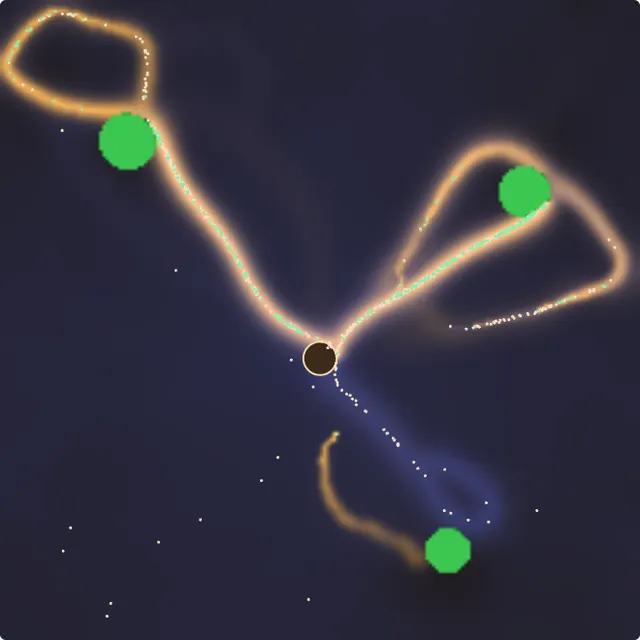
Ant Colony
Hundreds of ants build pheromone trails to food; turn on births and deaths, place spiders or pit two colonies.
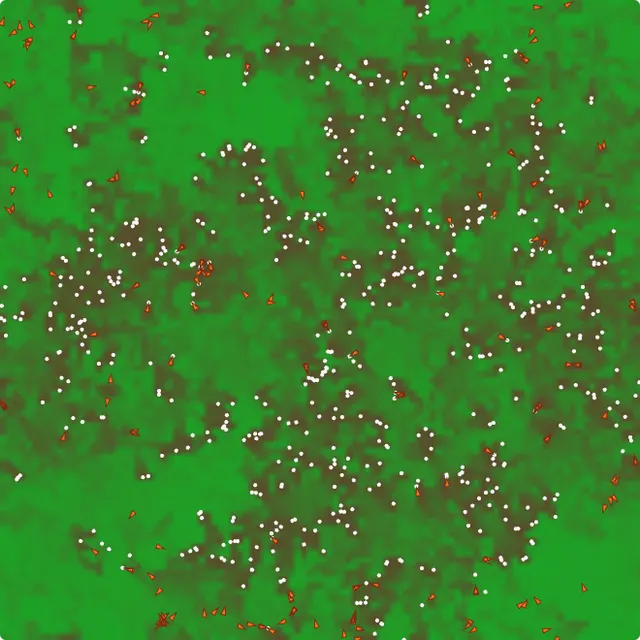
Predator-Prey Ecosystem
Rabbits, foxes and grass in a live food web — watch Lotka-Volterra cycles and evolution unfold.
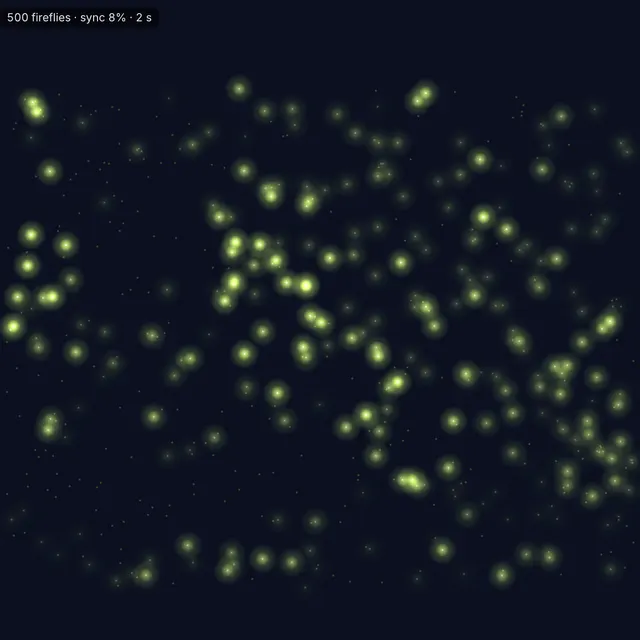
Firefly Synchrony
Simulated fireflies shift from flashing at random to flashing in unison.
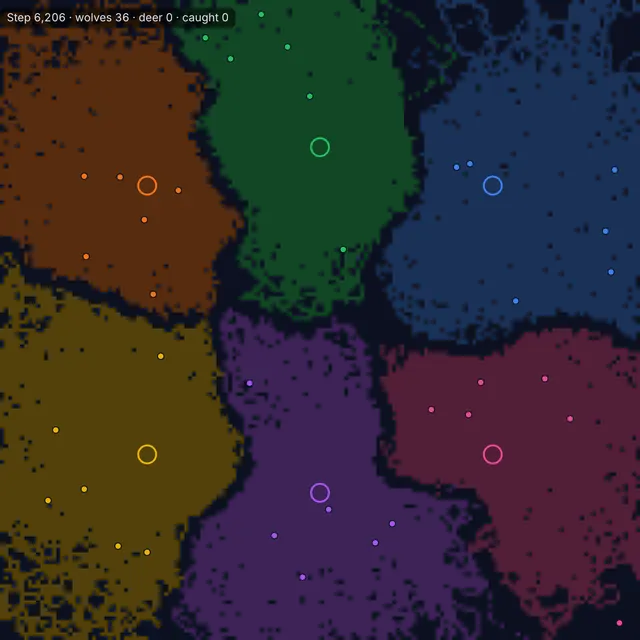
Wolf Pack Territories
Wolf packs divide the land by scent marks, with buffer zones between territories where deer survive.
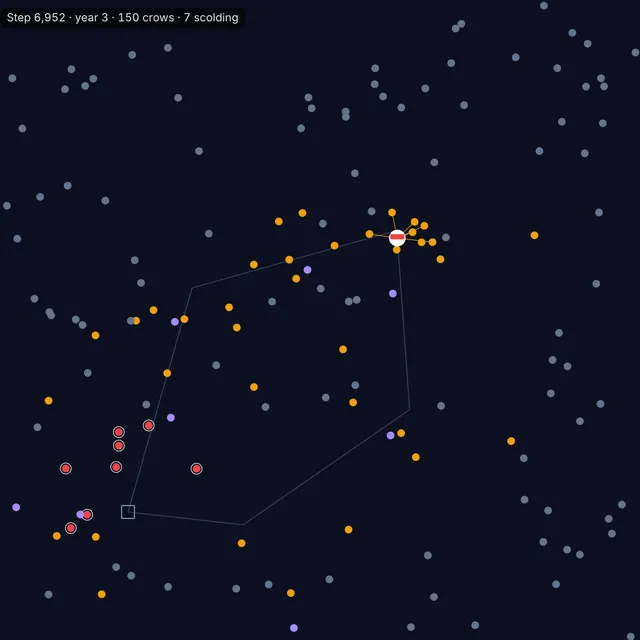
Crow Mobbing
Crows that know a dangerous face scold it, naive crows in the mob learn it, and the knowledge spreads for years.
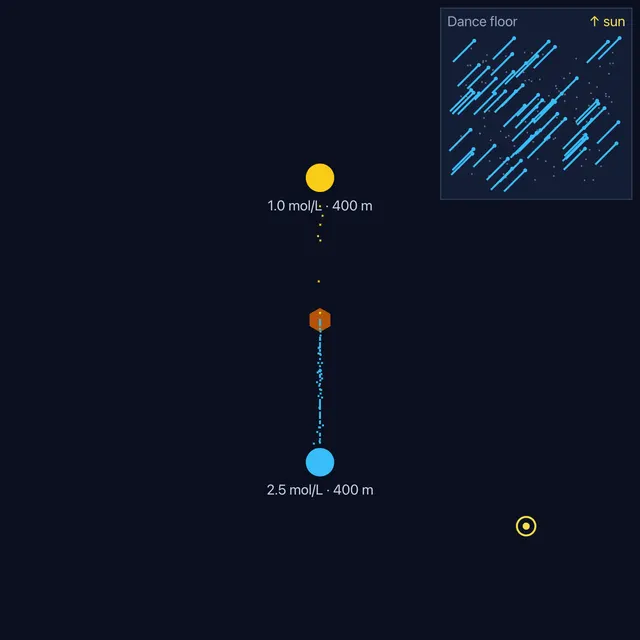
Honeybee Foraging
Foragers dance longer for richer patches and idle bees follow a random dance, so the colony picks the best flowers.
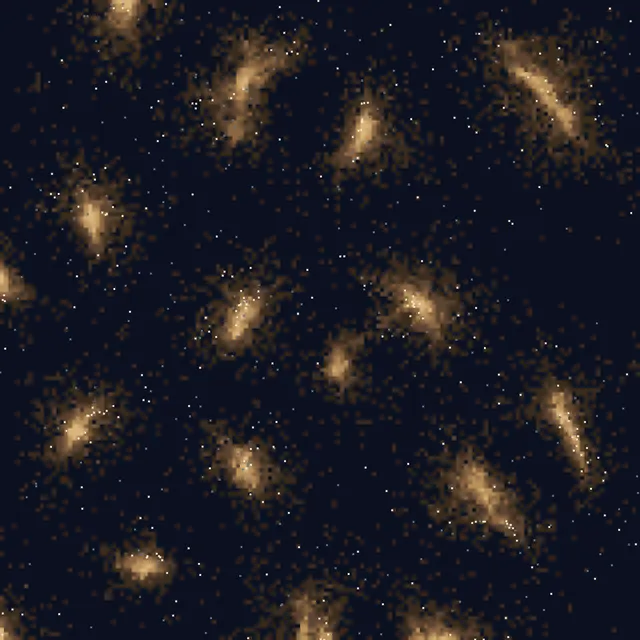
Termite Mound Building
Termites drop soil where pheromone from fresh soil is strong, so evenly spaced pillars rise with no plan.
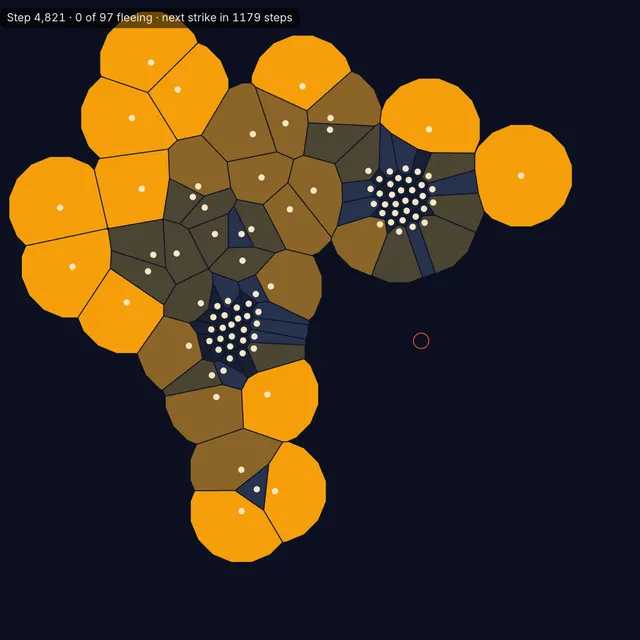
Selfish Herd
Animals bunch up to shrink their domains of danger, and the ones left at the edge are caught most.
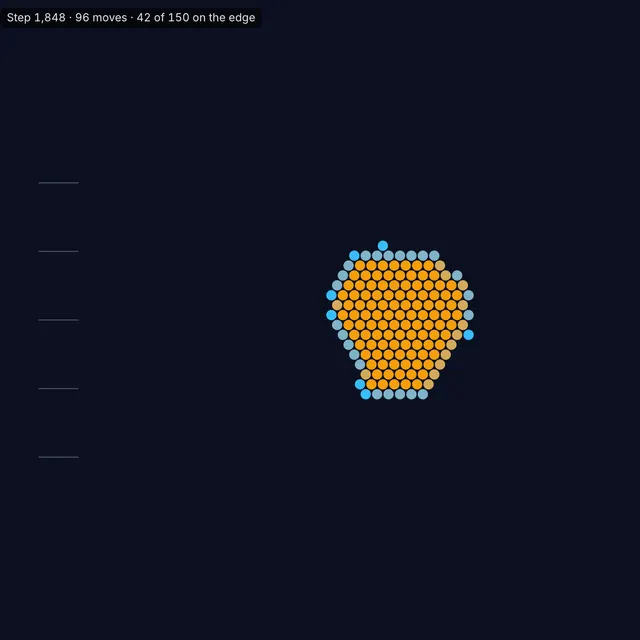
Penguin Huddle
Exposed penguins walk round to the sheltered side, so the huddle creeps downwind and the warmth is shared.
Frequently asked questions
What is an animal behavior simulation?
A model that gives each animal a few rules taken from field or laboratory studies and lets the group's behavior follow from them. The ants here follow two pheromone trails (Deneubourg and colleagues 1990), the bees follow random dances (Camazine and Sneyd 1991), and the wolves turn back from a neighbor's scent marks (Lewis and Murray 1993).
Are these simulations good for biology class?
Yes. They are free, need no sign-up, run on Chromebooks and tablets, and keep their settings in the share link. Ant Colony, Honeybee Foraging, Termite Mound Building, Selfish Herd, Crow Mobbing, Wolf Pack Territories and Penguin Huddle support NGSS HS-LS2-8 on group behavior, and Predator-Prey Ecosystem MS-LS2-1 and MS-LS2-2 on populations and interactions.
Do the numbers match real animals?
The rules come from published studies, but many rates are model settings chosen so a run plays out in minutes, and each tool says which. The simulations show how a behavior works, not the exact numbers for a species.