
Crowd, traffic and epidemic simulations
People follow a few rules: walk toward a goal, keep a distance, brake for the car ahead, pass on what they hear. Each simulation here runs a published model of those rules, and a chart or a readout measures the result.
Crowd Evacuation moves people with the social force model of Dirk Helbing and Péter Molnár (1995); at high panic the door clogs, the faster-is-slower effect Helbing, Illés Farkas and Tamás Vicsek simulated in 2000. The same forces sort two crowds into lanes in Pedestrian Corridor, send shoppers through doors and turnstiles in Mall Entrance and walk people past braking cars in Parking Lot. Stadium Exit empties a seating section with the floor-field cellular automaton of Carsten Burstedde and colleagues (2001).
Traffic Jam grows jams with no accident behind them in the cellular automaton of Kai Nagel and Michael Schreckenberg (1992), and Intersection compares signals and an all-way stop with cars that follow the Intelligent Driver Model of Martin Treiber and colleagues (2000). Checkout & Drive-Through keeps the books on every wait beside Erlang's formula and Little's law, and Airplane Boarding times five boarding orders against those Jason Steffen and Jon Hotchkiss measured in 2012.
Epidemic Spread passes a disease between people who come close, through the stages of the SEIR model, with distancing, testing, contact tracing and super-spreading. Global Pandemic carries an outbreak between 214 cities by travel, and Rumor Spread passes a story along a network until its spreaders meet people who already know it, with the Maki-Thompson model as Maziar Nekovee and colleagues stated it in 2007.
Every tool cites its sources, names its model settings and keeps its settings in the share link, so a class can run the same experiment.
12 People & Traffic tools
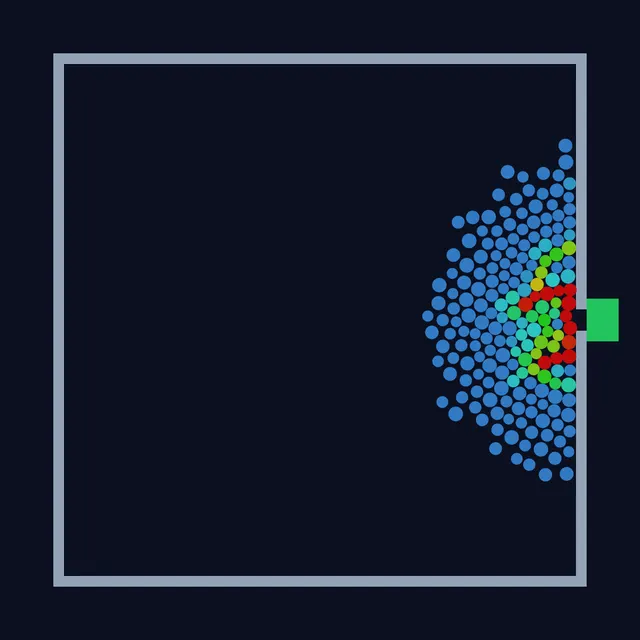
Crowd Evacuation
Simulate a crowd leaving a room with Helbing's social force model, including the faster-is-slower effect.
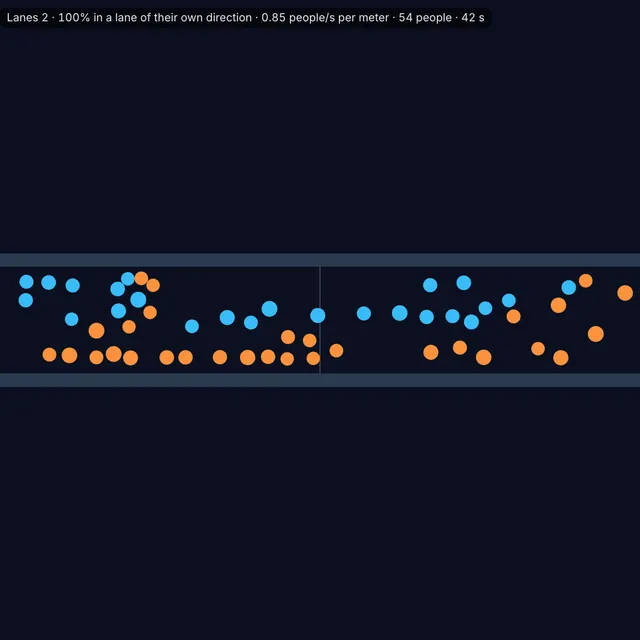
Pedestrian Corridor
Two crowds walk a corridor in opposite directions and form lanes on their own, in the social force model.
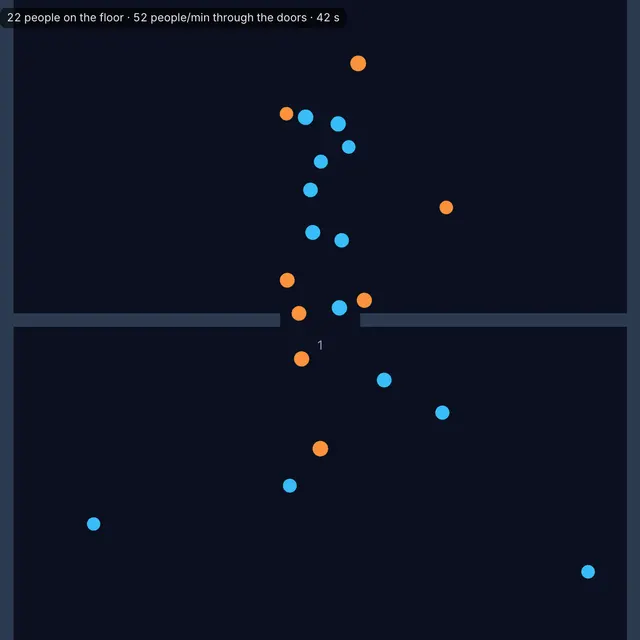
Mall Entrance
People go in and out of a building through doors, turnstiles or a revolving door, in the social force model.

Parking Lot
Shoppers walk from parked cars to a store entrance while cars drive the aisles and brake for them.

Airplane Boarding
Board a single-aisle plane five ways, from random to back to front, and see why passengers stowing bags block everyone behind them.
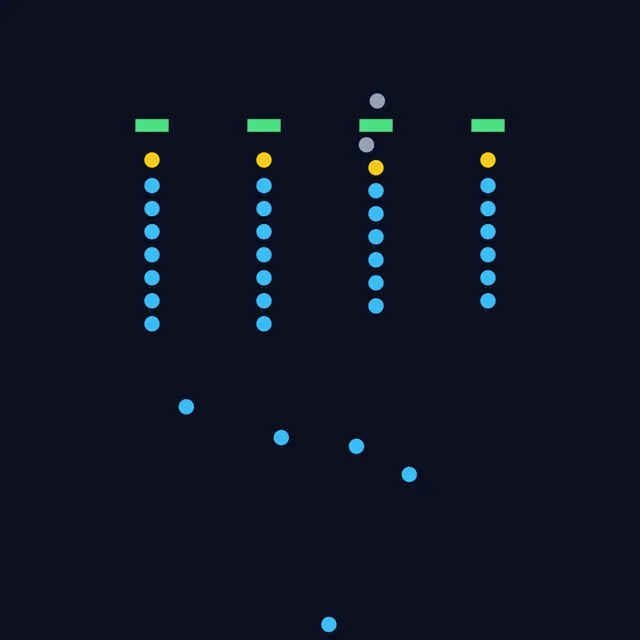
Checkout & Drive-Through
Customers arrive at random and wait in line: compare separate lines, one line, an express lane, drive-through windows and venue gates.

Intersection
Run a four-way junction with fixed, actuated or max-pressure signals or an all-way stop, and count the delay and near misses.
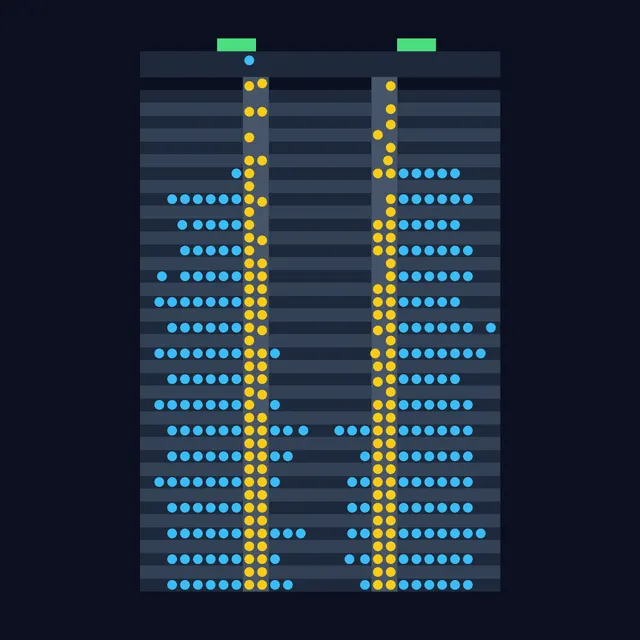
Stadium Exit
Empty a stadium seating section through stepped aisles and vomitories, and see what sets the time to the last person out.
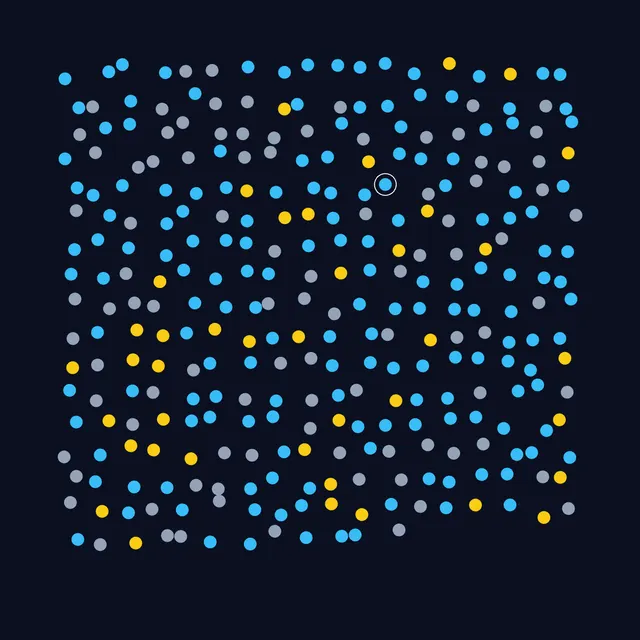
Rumor Spread
Pass a story from person to person on a network and see how many hear it before the spreaders stop.
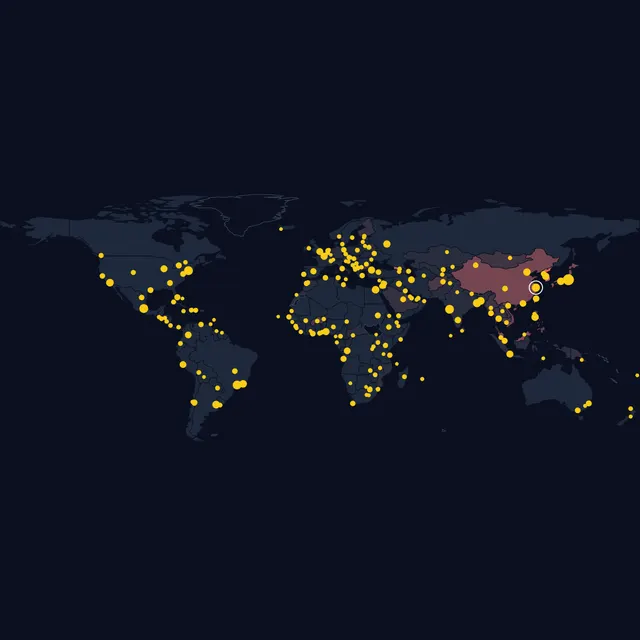
Global Pandemic
Follow an outbreak from one city around the world as travelers carry it between 214 cities, and try travel cuts, lockdowns and vaccines.
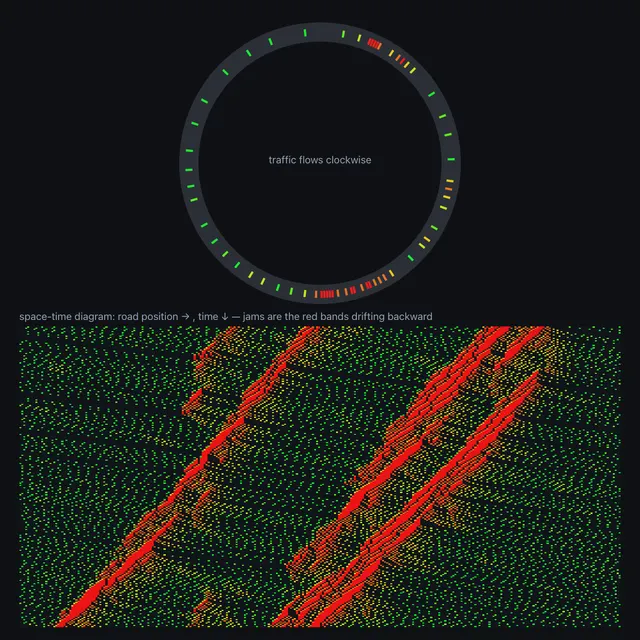
Traffic Jam
Watch phantom traffic jams appear from nothing on a ring road, with a space-time diagram.
Epidemic Spread
An agent-based SEIR outbreak — flatten the curve with distancing, quarantine, masks and vaccines.
Frequently asked questions
What is the social force model?
A model of walking in which each person is pulled toward a goal at a preferred speed and pushed away from other people and from walls, as if by forces. Dirk Helbing and Péter Molnár published it in 1995. Crowd Evacuation, Pedestrian Corridor, Mall Entrance and Parking Lot use it; Stadium Exit moves people on a grid of cells instead.
Why do traffic jams form with no accident?
Because one driver's braking passes backward to the cars behind. In the Nagel-Schreckenberg model of 1992, a driver who hesitates at random is enough to start a jam that drifts against the traffic, and Sugiyama and colleagues saw the same with real cars on a circular track in 2008.
Do the numbers match a real building or road?
The rules come from published studies, but many rates are model settings chosen so a run plays out in minutes, and each tool says which. The simulations show how crowds, traffic and outbreaks work, not the numbers for a particular building, road or disease.