
Snowflake Maker
Cut, draw or grow six-sided snowflakes — with printable templates and Cricut-ready SVG.
Drag a closed shape to cut it out of the folded paper — every cut repeats in all 12 folds. Switch to Punch to tap shapes.
How is Snowflake Maker working for you?
About Snowflake Maker
- Symmetry
- Six-fold: one 30-degree wedge repeated across 12 layers
- Modes
- Paper cut, Draw and Grow
- Growth model
- Clifford Reiter's hexagonal snow-crystal automaton (2005)
- Paper
- Hexagon or round sheet
- Export
- PNG, cutting machine SVG, printable folded template, growth video
Good for: Prints and files
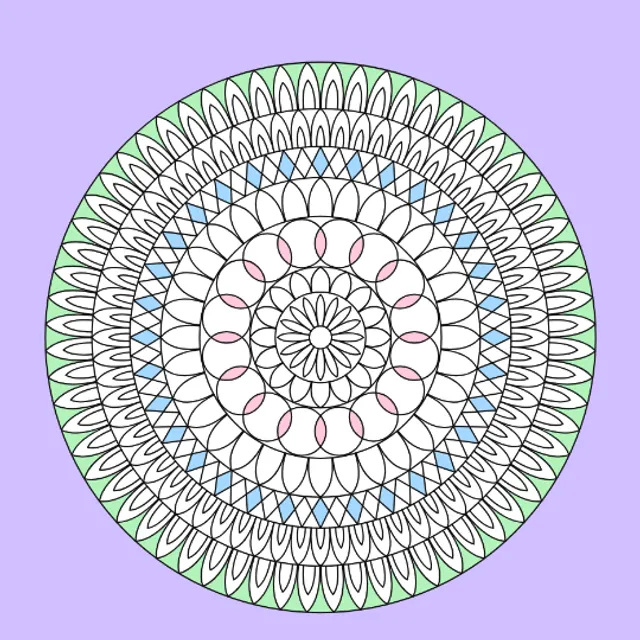
Snowflake Maker is a free online tool for designing six-sided snowflakes three ways. In Paper cut mode you cut shapes out of a virtual sheet folded into a 30-degree wedge: every lasso cut or punch is repeated across all 12 layers, exactly like cutting folded paper, and the unfolded snowflake updates instantly.
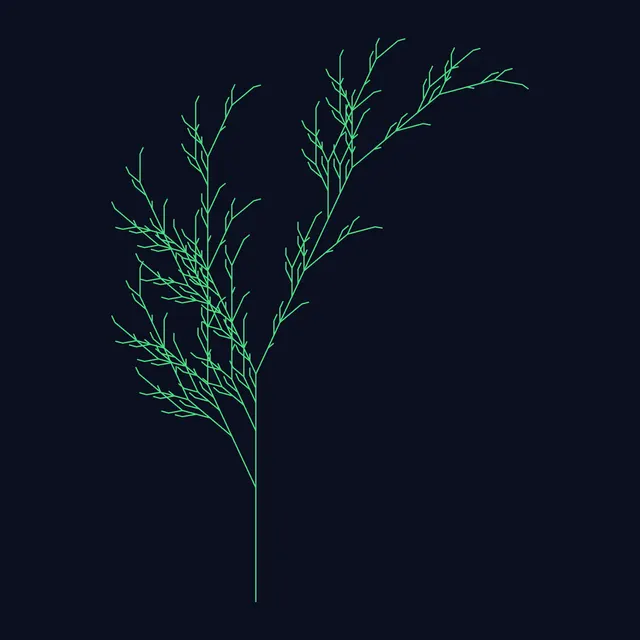
Because the cuts are true vector geometry, you can export a clean SVG for Cricut, Silhouette or laser cutters, print the folded template to cut real paper snowflakes with scissors, or download a high-resolution PNG for cards, wallpapers and classroom decorations. Draw mode lets you sketch a snowflake freehand with six-fold mirror symmetry, starting blank or from a Stellar dendrite, Fern-like, Sectored plate or Simple star arm, and Grow mode simulates how real snow crystals form.
Grow mode uses Clifford Reiter's hexagonal cellular automaton for snow crystal growth: water vapor diffuses across a hexagonal grid and freezes onto the crystal, producing stellar dendrites, ferns and hexagonal plates that depend on the vapor level and growth rate — the same six-fold symmetry that comes from the hexagonal structure of ice.
How to use Snowflake Maker
- Choose a mode. Pick Paper cut to cut a folded sheet, Draw to sketch with six-fold symmetry, or Grow to simulate a crystal.
- Cut the paper. With Lasso cut, drag a closed shape anywhere on the snowflake to cut it out — it repeats in all 12 folds. Switch the Tool to Punch to tap one of ten shapes, from circles and stars to moons, drops, snowflakes and squares. Press Randomize for an instant design.
- Refine. Undo and Redo any cut, change the paper shape to Hexagon or Round, and recolor the paper and background.
- Make it real. Open Export and choose Cutting machine SVG for a cutter, or Print folded template to cut a real paper snowflake with scissors.
- Grow a crystal. In Grow mode, pick a preset such as Stellar dendrite and press Play. Tap or drag on the crystal to sprinkle ice seeds that grow their own symmetric branches, adjust vapor and growth to change the crystal habit, and record the growth as a video.
Frequently asked questions
How do I make a paper snowflake template?
Design your snowflake in Paper cut mode, then open Export and choose Print folded template. Fold a square sheet into a triangle, then into thirds, then in half again to make a 30-degree wedge, line up the template and cut away everything outside the gray shape.
Can I use the snowflake with a Cricut or laser cutter?
Yes. Export the Cutting machine SVG, which contains just the outline of the snowflake as a single vector path, and import it into Cricut Design Space, Silhouette Studio or your laser software.
Why do snowflakes have six sides?
Ice crystals form a hexagonal lattice, so water molecules attach in six equivalent directions. As a crystal falls, all six arms experience nearly the same temperature and humidity, which is why they grow so similarly. Grow mode models this with a hexagonal grid.
How can I use the Snowflake Maker in class?
Students design a snowflake in Paper cut mode, print the folded template, fold a square sheet into a 30-degree wedge and cut along the gray shape, so the unfolded paper matches the screen. It's a quick, hands-on lesson in six-fold and mirror symmetry. Switch to Grow mode afterward to show how the vapor and growth rates change a crystal's shape.
Are no two snowflakes alike?
For large, branched snow crystals, practically yes: each arm records the temperature and humidity it met while falling, so the number of possible shapes is astronomically large. Small, simple hexagonal prisms can look identical. Caltech physicist Kenneth Libbrecht has grown and photographed snow crystals in the lab for decades.
What do the Grow mode settings mean?
Vapor (β) is the background water vapor level, Growth (γ) is extra water added to the crystal edge each step, and Diffusion (α) is how fast vapor spreads. Low vapor with low growth gives branching dendrites; higher values give plates and sectored plates.
Is the Snowflake Maker free?
Yes. It is completely free with no sign-up, your designs are saved in your browser, and you can share a design with a link. Snowflakes you make are yours to use for crafts, cards and commercial projects.
Guides
References
- Reiter, C. A. (2005). A local cellular model for snow crystal growth. Chaos, Solitons & Fractals 23(4), 1111–1119.
- Libbrecht, K. G. (2005). The physics of snow crystals. Reports on Progress in Physics 68(4), 855–895.